✦ The story
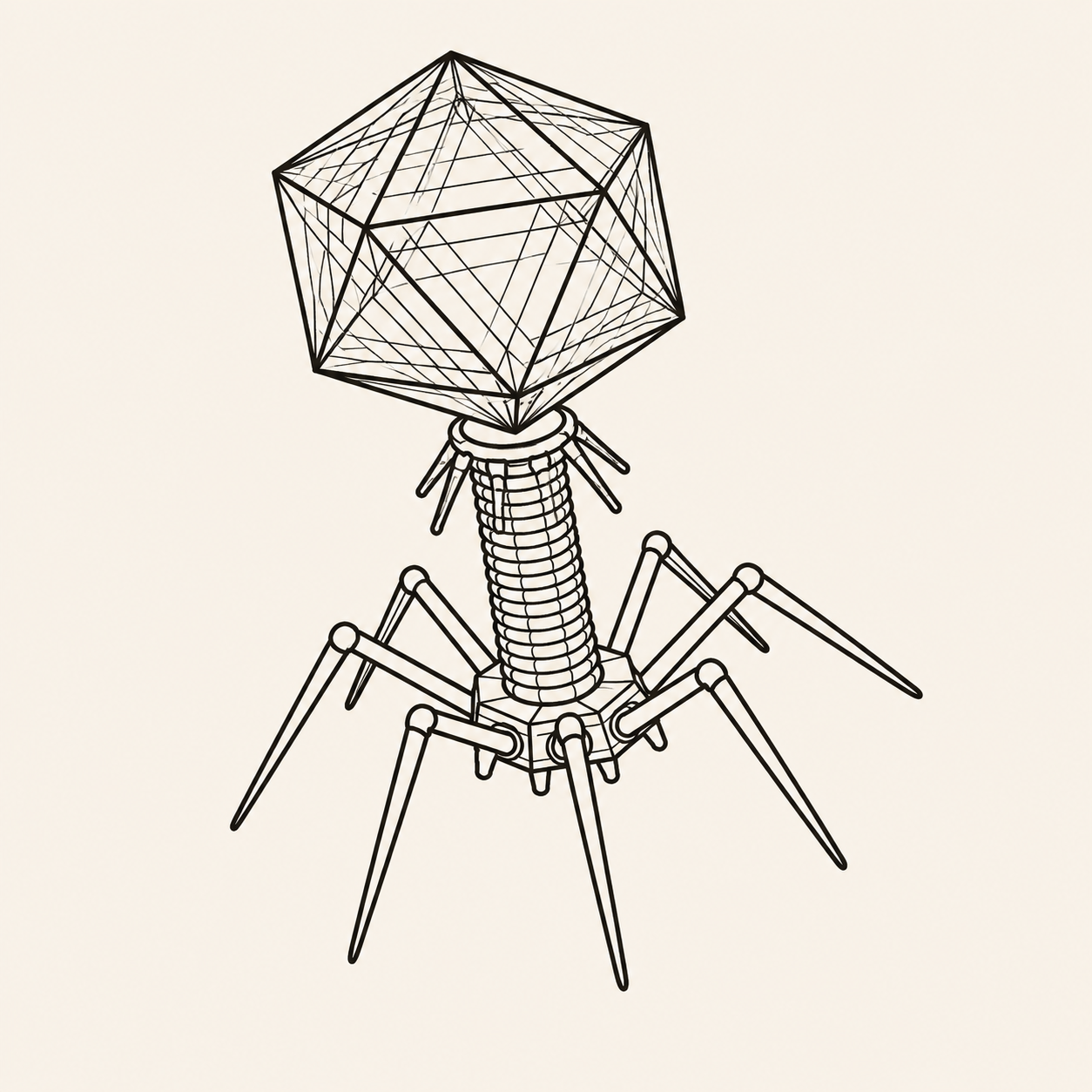
DRAPER is one of the anti-phage systems identified in the 2018 Sorek screen. Like Janus and Shedu, it belongs to the "identified-but-not-yet-mechanistically-resolved" fraction of the catalogue. The name evokes a strategist, a weaver of intrigue — a nod to the defense function we sense without seeing. The system is compact, conserved across several bacterial phyla, and confers measurable resistance to several phage families. What we don't know in 2026: which signal exactly it detects, by which pathway it blocks viral replication, and whether it acts by abortive cell death or by exclusion without cleavage. A PhD thesis is waiting for the right team.
Discovered 2018
By Doron S., Melamed S., Ofir G., Sorek R. et al. (Weizmann Institute) — *Science* 359 (2018)
★ Why we care
Bactaegion lists DRAPER as an orphan system to be characterized for the same reason as Janus: it is the archetype of what the Pasteur atlas multiplied 478,206-fold. The scientific value of a characterization effort is therefore proportionally huge — each resolved anti-phage system is potentially a new therapeutic template. DRAPER is in the cabinet to remind us that we are still at the beginning.
◇ The detail that lands
The format of the Doron 2018 paper is exemplary of scientific honesty: for the ten new systems, the Sorek team published phenotypic resistance profiles ("which phages it works against"), the essential genes ("which mutants kill the function"), but explicitly left the mechanistic question open for most. That's exactly the posture we adopt here on DRAPER: we have a gene cluster that works, we don't yet have the mechanism — and we don't manufacture the story we don't have.