✦ The story
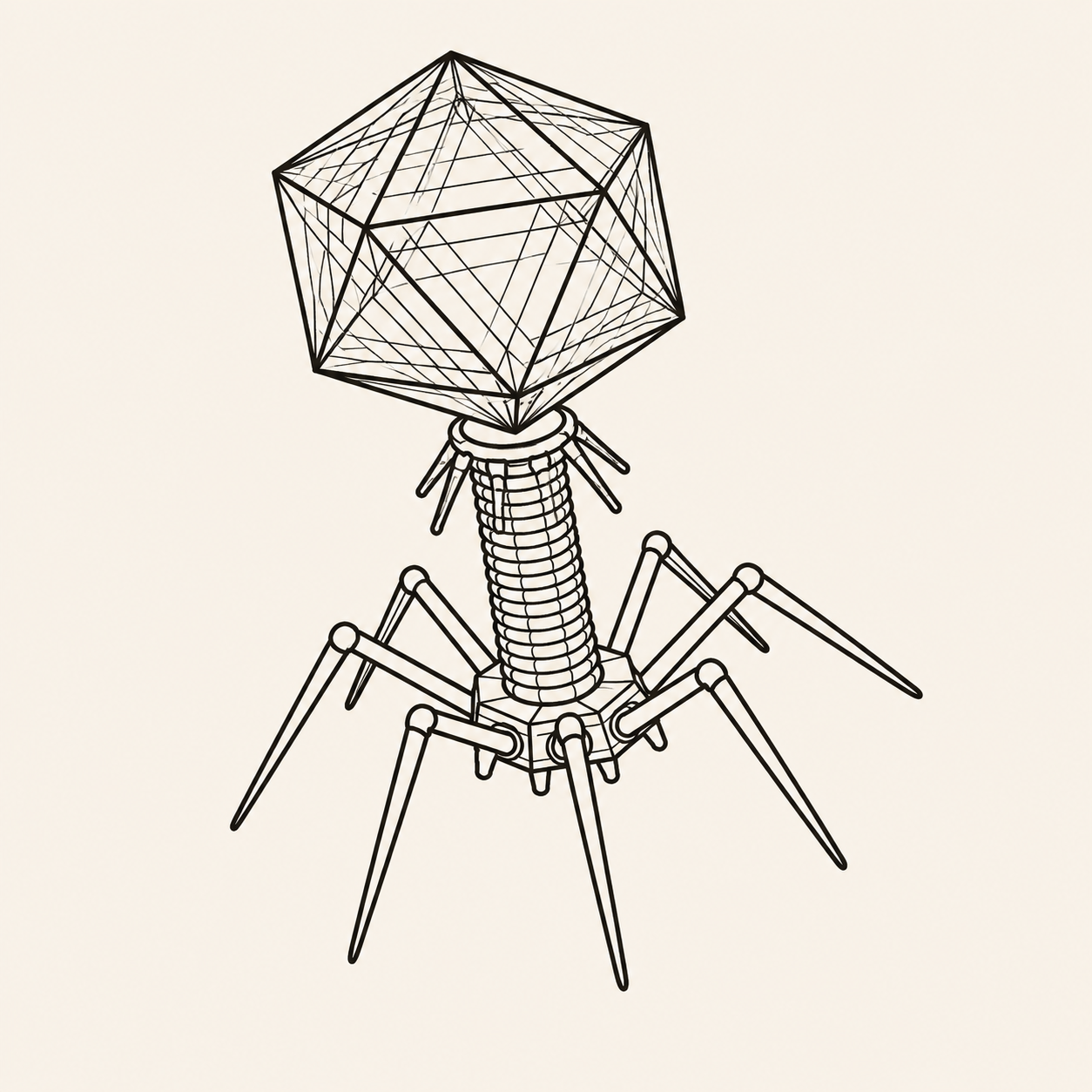
The Pif system (Phage inhibition Function) is one of the oldest identified: described as early as 1971 on the F plasmid of Escherichia coli, capable of blocking the replication of T7 phages. For more than 50 years, we knew it existed, we knew it worked, but the exact mechanism remained obscure — it took the modern techniques of genetics and cryo-EM to really understand. The system is encoded by 2 genes (pifA + pifB) and blocks phage replication at an early stage — probably by sequestration or degradation of an essential viral factor. Pif is also a textbook case for anti-phage epidemiology: carried by a conjugative plasmid, it transmits horizontally between bacteria, which has influenced the design of industrial phages (which must work around pif when treating E. coli cultures).
Discovered 1971
By Strobel M., Nomura M. (University of Wisconsin) — initial characterization; molecular mechanism only elucidated in 2024-2025
★ Why we care
Pif is not a system with strong direct translational potential — it's a mechanism specific to T7-like phages. But it sits in the Bactaegion cabinet as a historical landmark: it is the system that established the very concept of a mobile anti-phage arsenal. Understanding Pif means understanding how bacterial defense spread through the microbial world, and therefore how it can continue to spread — including toward engineered plasmids for phage-resistant industrial biotechnologies.
◇ The detail that lands
Pif is cited in virtually every old bacterial genetics textbook as the historical example of plasmid-borne immunity. It is the system that was used to demonstrate that anti-phage genes can be carried on plasmids — a founding fact of modern molecular biology. Without Pif, it might have taken even longer to realize that bacteria have modular and transmissible arsenals, rather than just a fixed set of chromosomal genes.