★ Why we care
APOBEC3s are a major but tricky target in oncology (lethal off-target effects) and in virology (anti-HIV). Septu, simpler, provides a screenable proxy for identifying selective compounds.
Bactaegion does not duplicate any scientific data. Everything comes from public databases.
The system that deaminates the enemy's cytidines.
Couple PtuA (ATPase) + PtuB (cytidine désaminase) qui détecte l'infection phagique et déclenche la mort cellulaire abortive. Mécanisme partiellement résolu, intérêt translationnel humain à ce stade indirect.
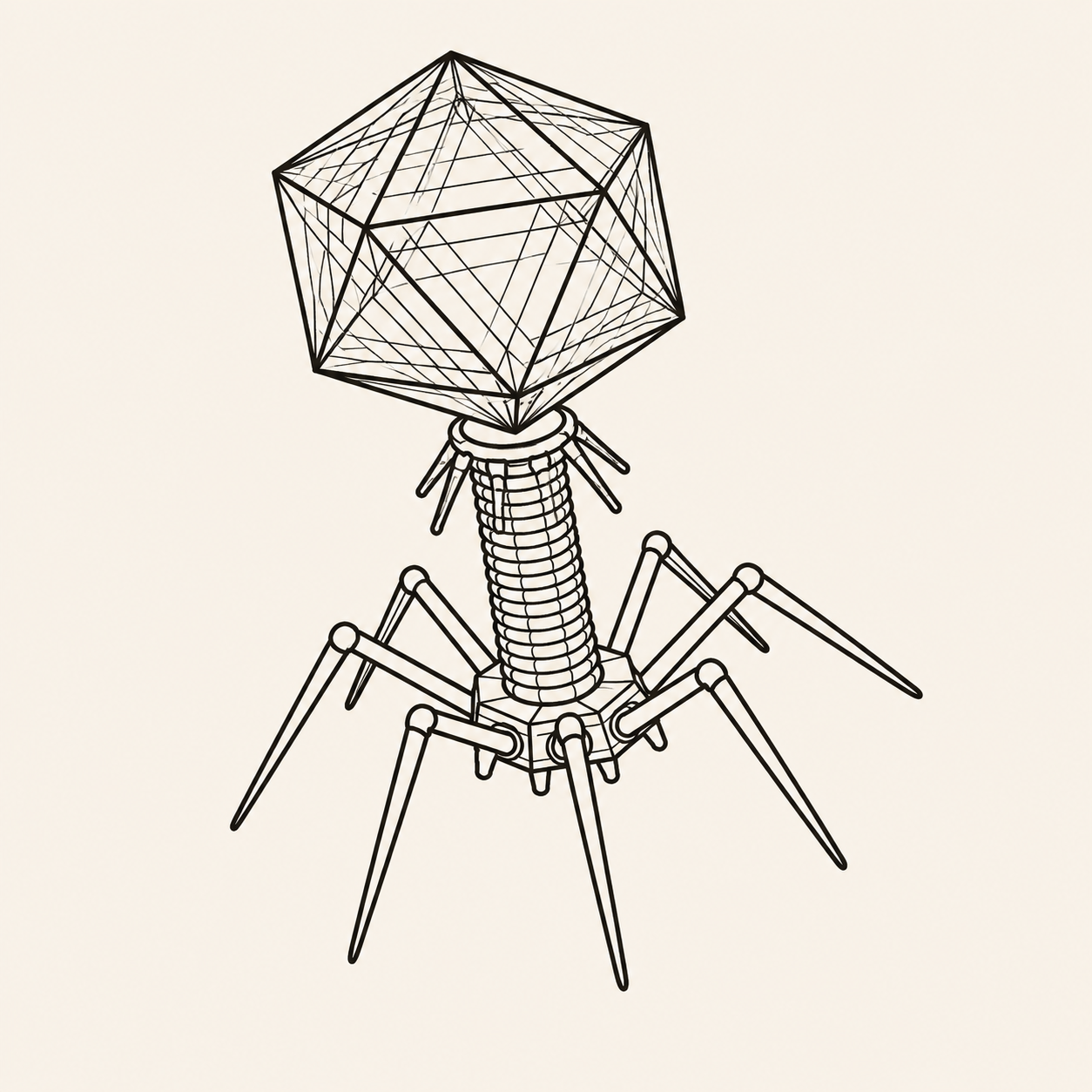
Septu (PtuA + PtuB) couples an ATPase to a cytidine deaminase. When the phage attacks, PtuB starts converting cytidines into uracils — on viral DNA, on viral RNA, on nucleotide pools. Viral proteins start mutating at high speed, lose their function, and infection fails. It's exactly the same mechanism that human APOBEC3s use against retroviruses (HIV in particular) — deaminate to sabotage. The analogy is so clean that some believe APOBEC3s are direct descendants of bacterial anti-phage cytidine deaminases.
APOBEC3s are a major but tricky target in oncology (lethal off-target effects) and in virology (anti-HIV). Septu, simpler, provides a screenable proxy for identifying selective compounds.
Human APOBEC3G is known for generating C-to-T mutations in the HIV genome — one of the reasons HIV mutates so fast. But it's also a major cause of tumor mutagenesis (the famous APOBEC signatures in oncology). Understanding how Septu selectively targets viral DNA and not its own would help design APOBEC3 modulators selective for anti-HIV vs. anti-tumor contexts.
No open lead yet. Frame the first one.