✦ The story
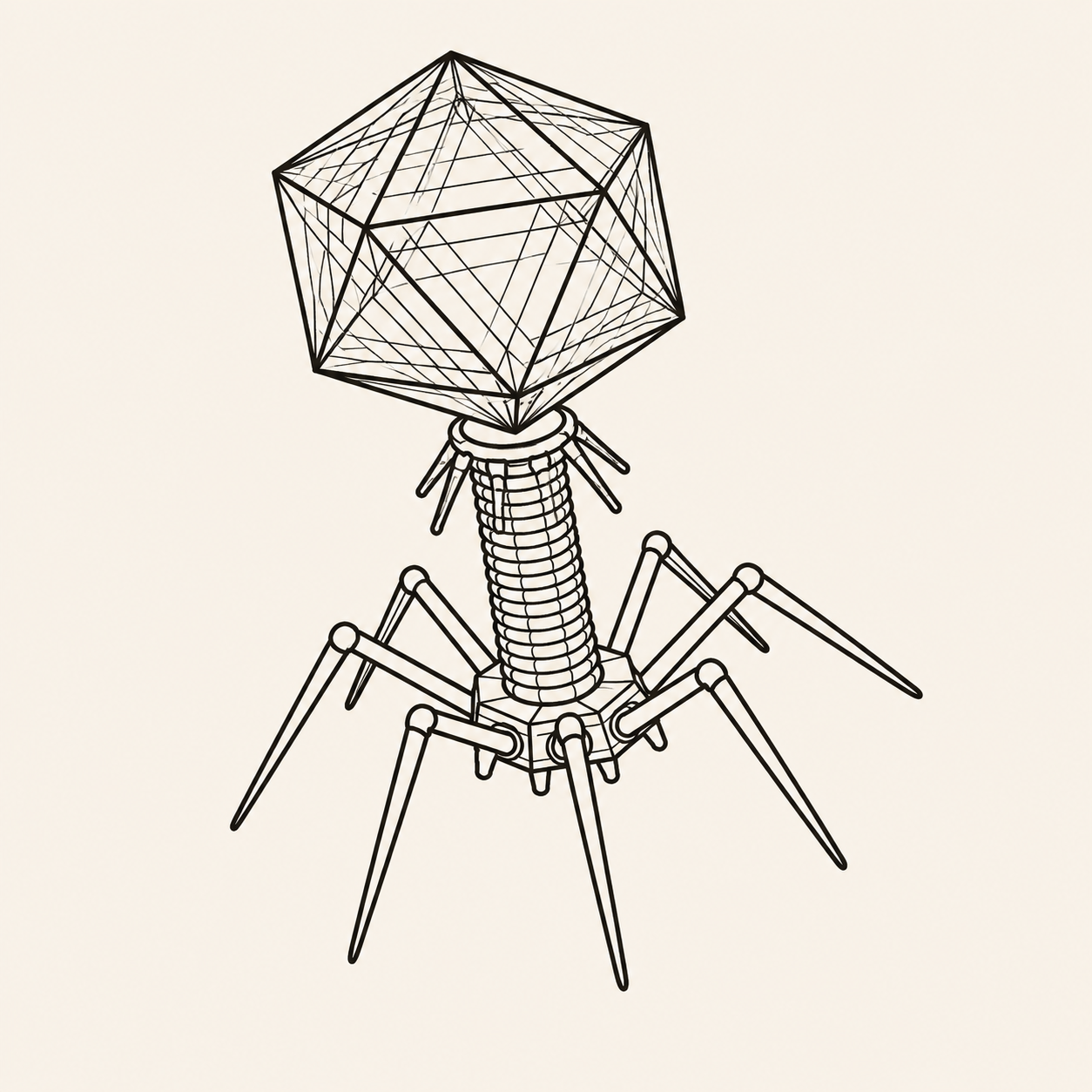
Hachiman was a Japanese Shinto god of war and protector of samurai — a figure of broad-spectrum defense. The anti-phage system that bears his name earns the comparison: it defends against an exceptional diversity of phages across multiple taxonomic families. Its architecture is minimalist — just two proteins, HamA (a helicase ATPase) and HamB (a nuclease) — but this simplicity hides a fascinating question: what does HamA recognize that is conserved across so many different phages? Probably a universal motif of the phage replication cycle, perhaps a replication intermediate or a secondary DNA structure specific to the lytic phase.
Discovered 2018
By Doron, Melamed, Ofir et al. (Weizmann Institute) — characterization Picton et al. 2024 (Nat. Microbiol.)
★ Why we care
Hachiman's "surveillance ATPase + conditional effector" architecture has a direct parallel with human RIG-I / MDA5 (helicase sensors of viral RNA that activate type I interferon). Understanding how HamA recognizes a conserved phage motif would illuminate the design of RIG-I/MDA5 modulators to potentiate innate antiviral immunity.
◇ The detail that lands
The Bernheim 2026 atlas (Pasteur) notes that Hachiman is one of the most understudied anti-phage systems relative to its importance. Present in ~3% of bacterial genomes, but with a tiny published footprint. Open playing field for characterizing a mechanism that works against almost everything.